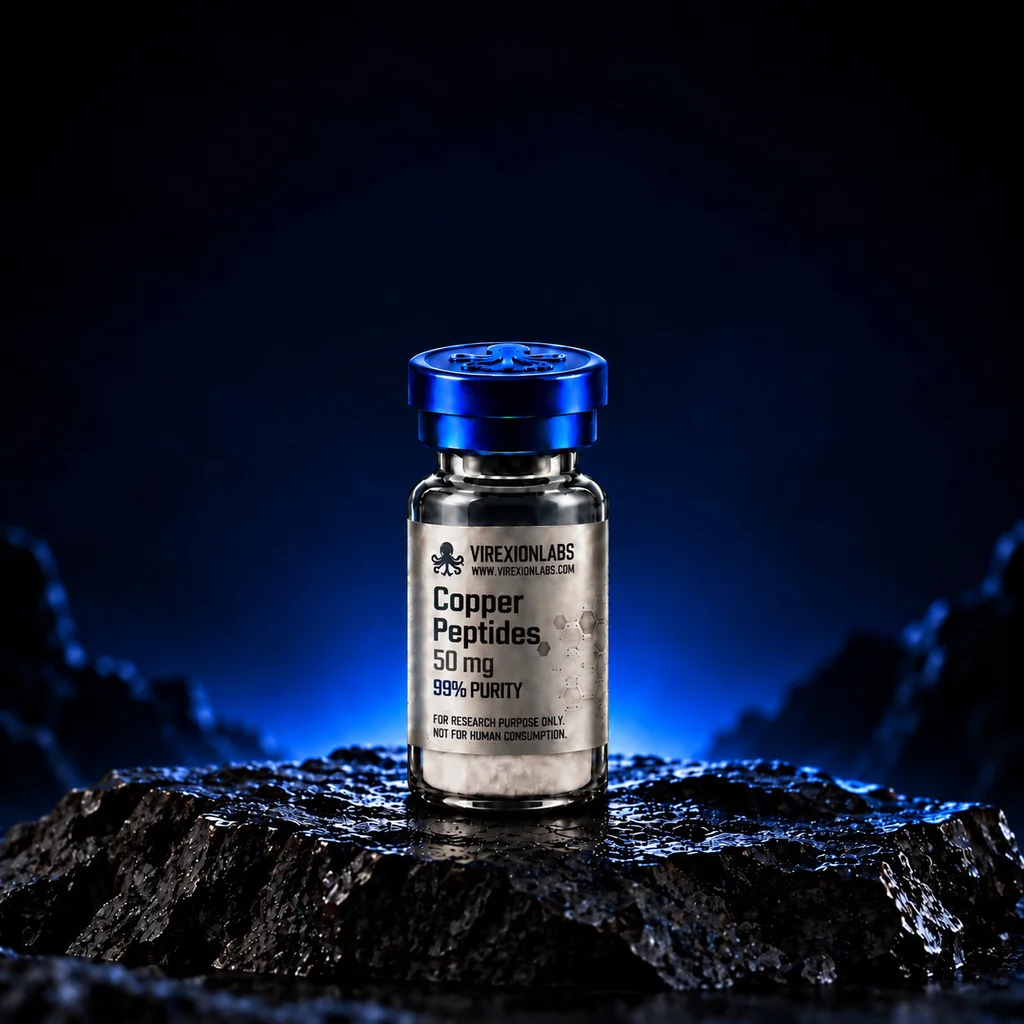
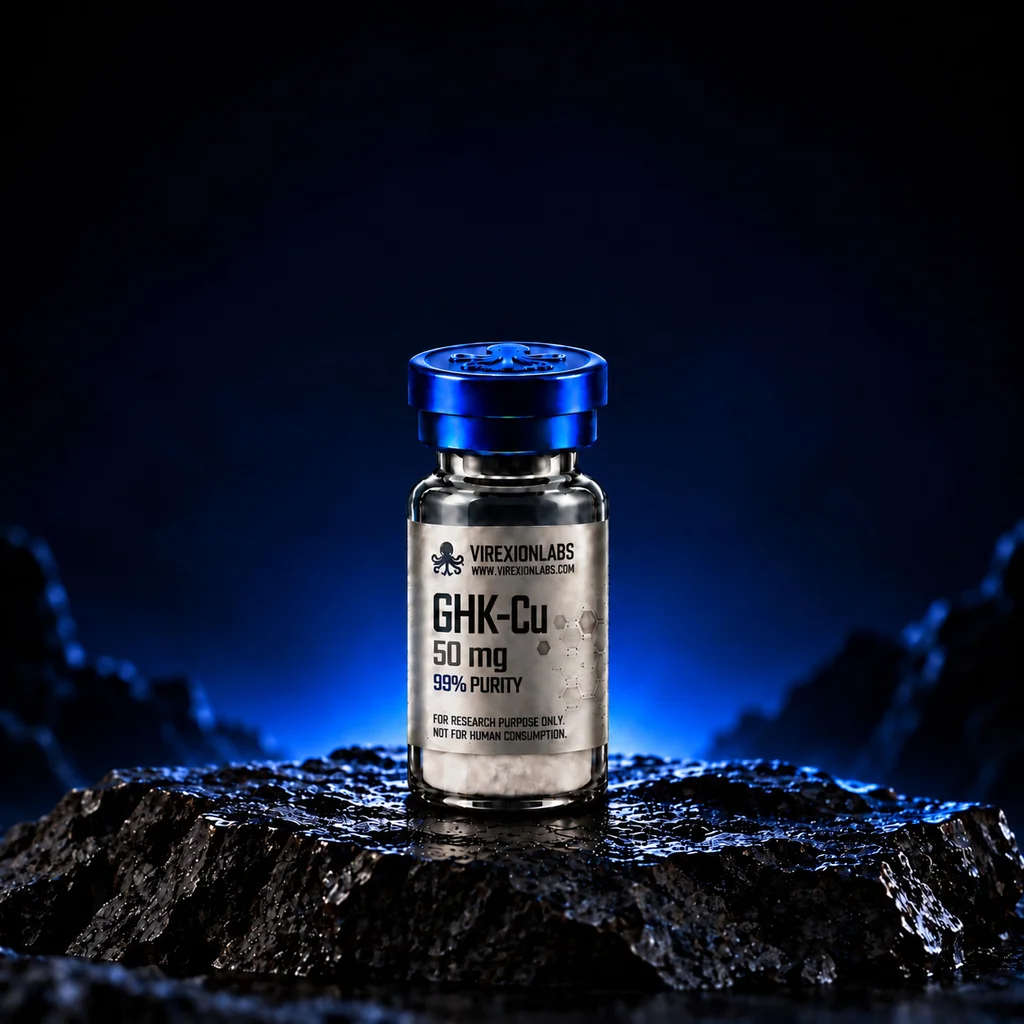
| Contents per vial | 50 mg |
|---|---|
| Form | Lyophilized powder |
| Packaging | Sealed glass vial |
| Purity | 99,94 % |
| Storage | 2–8 °C, keep dry and protect from light |
| Molecular formula | C14H22CuN6O4 |
| Molecular weight | 401,91 g/mol |
| Sequence or structure | Gly–His–Lys (GHK) |
| CAS | 89030-95-5 |
| Intended use | For laboratory research only |
About this product
GHK-Cu is a naturally occurring copper tripeptide complex researched mainly in the area of skin, healing and extracellular matrix. Research suggests an impact on collagen synthesis, tissue remodeling, antioxidant processes and gene expression. Most practical data are available from topical cosmetic and dermatological research. GHK-Cu is also interesting as a carrier of bioavailable copper.
What is GHK-Cu?
GHK-Cu is classified as a “synthetic peptide or peptide analogue” and is evaluated in scientific research in relation to areas such as collagen and skin elasticity, wound healing, skin regeneration, antioxidant and anti-inflammatory processes. Attention is paid to its interaction with relevant receptors, enzymes or cellular pathways and subsequent changes in measurable laboratory parameters.
Mechanism of action under investigation
GHK-Cu binds copper and forms a biologically active complex. The latter can affect metalloproteinases, growth factors, antioxidant enzymes and gene expression related to tissue remodeling.
MAIN AREAS OF RESEARCH
• Collagen and skin elasticity: GHK-Cu is being investigated for its effect on fibroblasts and the formation of components of the extracellular matrix, especially collagen, elastin and glycosaminoglycans.
• Skin healing and remodeling: Research is devoted to repair cell migration, new tissue formation, and matrix remodeling during skin healing.
• Skin regeneration and photodamage: GHK-Cu is being investigated in models of skin damage, including processes related to UV stress, strength, elasticity and appearance of aging skin.
• Antioxidant and inflammatory processes: The complex of copper with GHK affects multiple signals associated with oxidative stress and inflammation, which are involved in tissue damage and repair.
• Hair follicles: GHK-Cu research also includes biological processes in hair follicles, especially their growth, size and the surrounding regenerative environment.
Research findings to date
Work to date on the substance GHK-Cu is devoted to areas that include collagen and skin elasticity, wound healing, skin regeneration, antioxidant and anti-inflammatory processes, hair follicles. Research suggests an impact on collagen synthesis, tissue remodeling, antioxidant processes and gene expression. Most practical data are available from topical cosmetic and dermatological research. Local reactions and copper-related cellular toxicity at inappropriate concentrations are possible.