| Contents per vial | 80 mg |
|---|---|
| Blend composition | KPV 10 mg + TB-500 10 mg + BPC-157 10 mg + GHK-Cu 50 mg |
| Form | Lyophilized powder |
| Packaging | Sealed glass vial |
| Purity | High purity, research grade- 98 % |
| Storage | 2–8 °C, keep dry and protect from light |
| Molecular formula | Blend |
| Molecular weight | Blend |
| Sequence or structure | GHK-Cu: Gly–His–Lys (GHK) in a coordination complex with copper(II). The formula describes the neutral complex without counterions. BPC-157: GEPPPGKPADDAGLV. TB-500: Ac–LKKTETQ; N-acetylated thymosin beta-4 fragment, amino acids 17–23. KPV: Lys–Pro–Val (KPV) |
| CAS | GHK-Cu: 89030-95-5; BPC-157: 137525-51-0; TB-500: 885340-08-9; KPV: 67727-97-3 |
| Intended use | For laboratory research only |
About this product
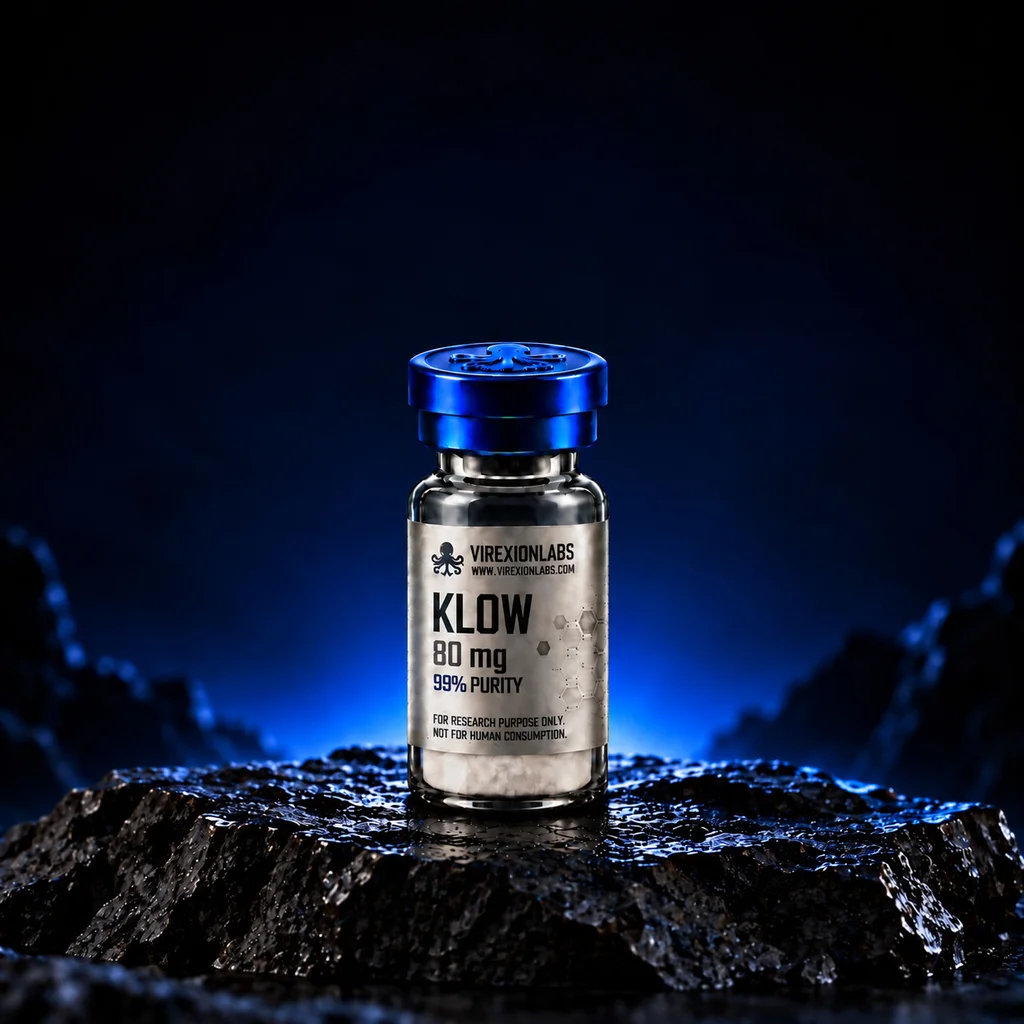
KLOW is a four-component research blend of GHK-Cu, BPC-157, TB-500 and KPV. Compared to GLOW, it also contains KPV, which is being investigated separately mainly in connection with inflammatory signaling and epithelial tissues.
What is KLOW?
KLOW expands the three-component mixture of GLOW with KPV – a short tripeptide derived from α-MSH. GHK-Cu, BPC-157 and TB-500 contribute research areas related to matrix, cell migration and tissue repair, while KPV is investigated in relation to inflammatory pathways and the epithelial barrier.
MAIN AREAS OF RESEARCH
• Tissue Regeneration and Remodeling: GHK-Cu, BPC-157, and TB-500 form the same foundation as GLOW and are independently investigated in matrix regeneration, cell migration, and healing of damaged tissue.
• Inflammatory processes: KPV expands the mix with a peptide investigated in the regulation of inflammatory signaling, including NF-κB pathways and selected inflammatory cytokines.
• Collagen and skin matrix: GHK-Cu is being investigated for processes associated with fibroblasts, the formation of collagen and elastin and the overall remodeling of the extracellular matrix.
• Soft tissue healing: BPC-157 and TB-500 are independently investigated in preclinical tendon, wound and cell migration models, while GHK-Cu completes the research profile with matrix and copper-dependent processes.