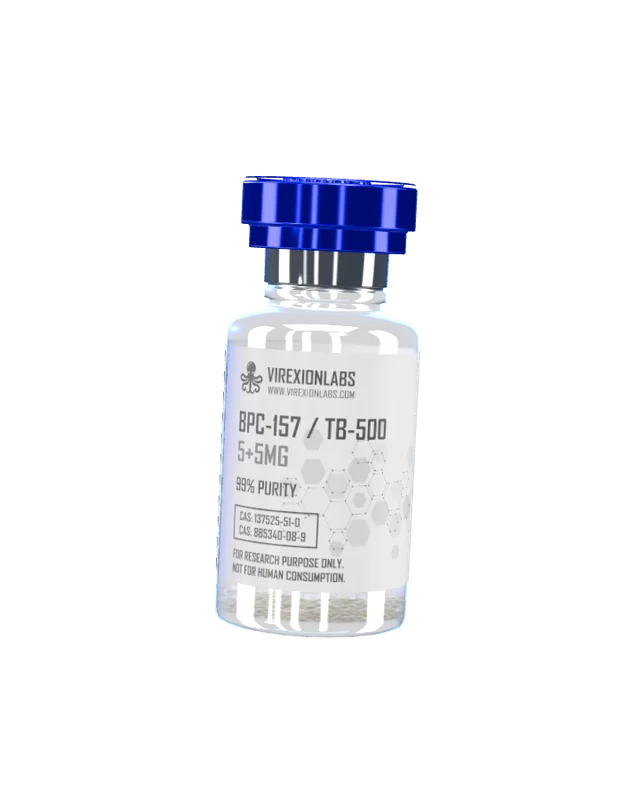
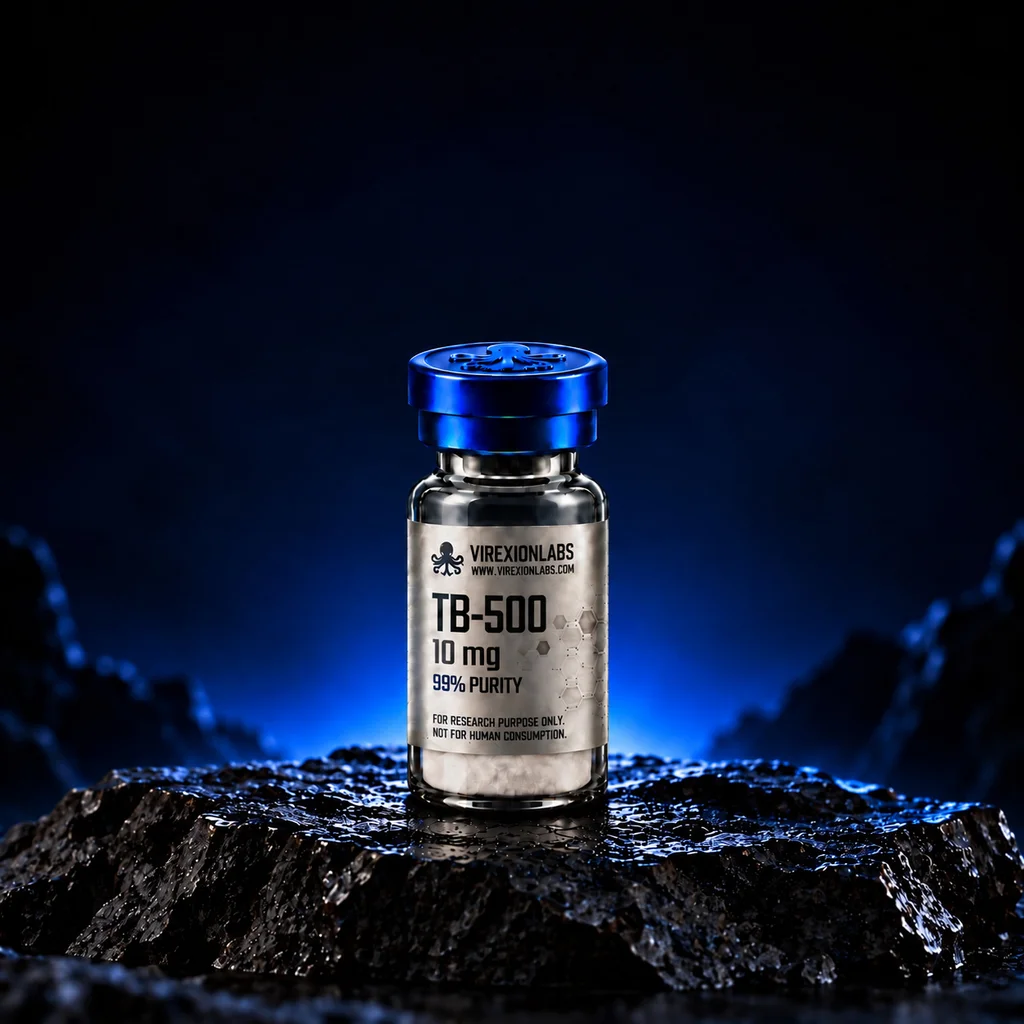
| Contents per vial | 10 mg |
|---|---|
| Form | Lyophilized powder |
| Packaging | Sealed glass vial |
| Purity | 99,57 % |
| Storage | 2–8 °C, keep dry and protect from light |
| Molecular formula | C38H68N10O14 |
| Molecular weight | 889,01 g/mol |
| Sequence or structure | Ac–LKKTETQ; N-acetylated thymosin beta-4 fragment, amino acids 17–23 |
| CAS | 885340-08-9 |
| Intended use | For laboratory research only |
About this product
TB-500 is a synthetic peptide fragment related to thymosin beta-4 that is being investigated for the processes of healing, cell migration and tissue repair. Attention is paid mainly to muscles, tendons, connective tissues, blood vessels and wound healing. Thymosin beta-4 interacts with actin, which is important for cell movement and organization. TB-500 therefore serves mainly as an experimental tool in the study of regeneration.
What is TB-500?
TB-500 is characterized in this portfolio as a synthetic peptide or peptide analog intended for controlled laboratory investigation. Scientific interest is focused on soft tissue regeneration, wound healing, angiogenesis, cell migration and related biochemical or receptor processes. Changes in predetermined markers, functional responses and signaling pathways are compared in experimental protocols.
Mechanism of action under investigation
Thymosin beta-4-derived peptides affect the actin cytoskeleton and cell migration. This can alter the behavior of cells in healing and angiogenesis; the clinical significance of TB-500 in humans has not been confirmed.
MAIN AREAS OF RESEARCH
• Cell migration and actin: TB-500 is related to the actin-binding sequence of thymosin beta-4, therefore the movement of cells and the remodeling of their internal cytoskeleton during tissue repair are mainly investigated.
• Soft tissue healing: Research on the fragment and the related thymosin beta-4 focuses on processes involved in the repair of skin, muscles and other soft tissues after injury.
• Angiogenesis: The migration of endothelial cells and the formation of new vascular structures, which are important in the supply of healing tissue, are investigated.
• Wound healing: Preclinical models monitor wound closure, collagen formation, and organization of new tissue during the healing process.
• Tissue remodeling: TB-500 is studied in relation to the remodeling of damaged tissue; when interpreting findings, it is important to distinguish data on the fragment from the more extensive research on full-length thymosin beta-4.
Research findings to date
Work to date with TB-500 has focused on areas including soft tissue regeneration, wound healing, angiogenesis, cell migration, inflammation and tissue remodeling. Attention is paid mainly to muscles, tendons, connective tissues, blood vessels and wound healing.