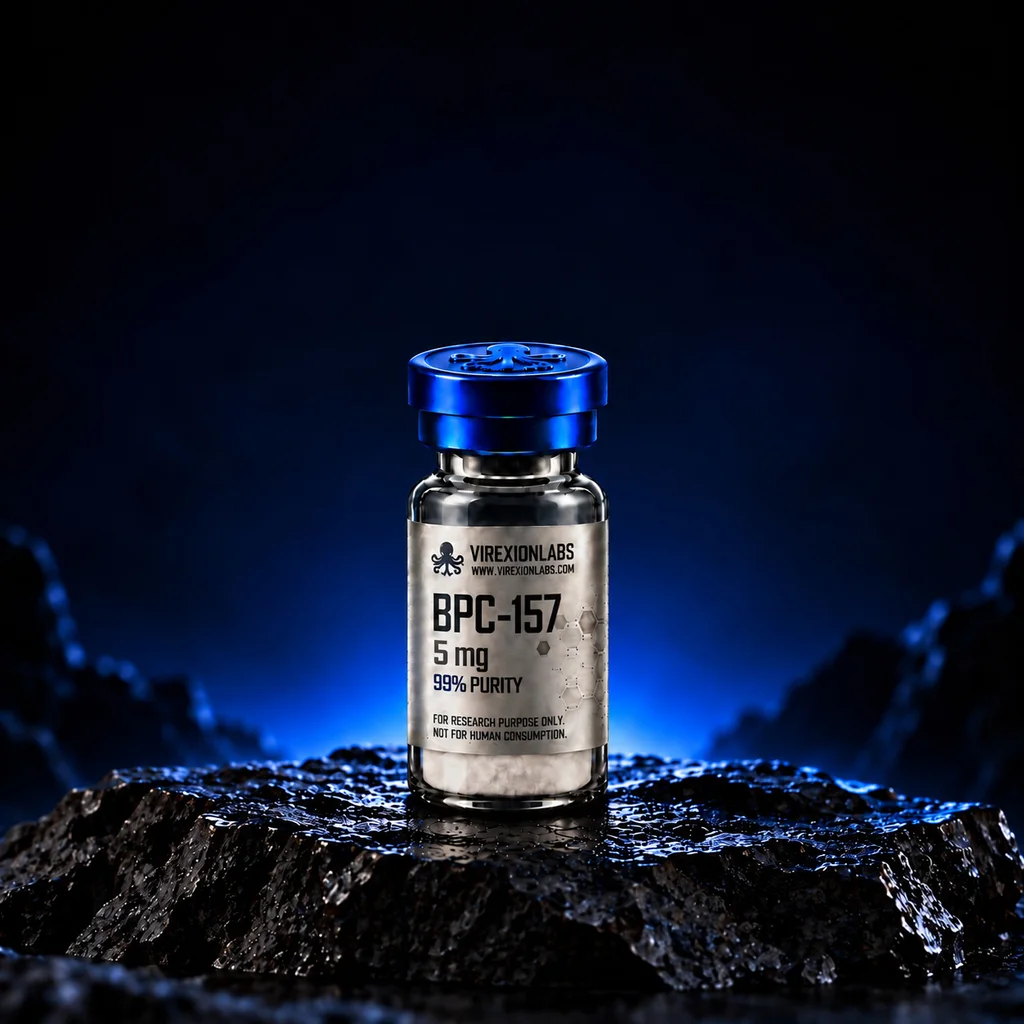
| Contents per vial | 5 mg |
|---|---|
| Form | Lyophilized powder |
| Packaging | Sealed glass vial |
| Purity | 99,74 % |
| Storage | 2–8 °C, keep dry and protect from light |
| Molecular formula | C62H98N16O22 |
| Molecular weight | 1419,54 g/mol |
| Sequence or structure | Gly-Glu-Pro-Pro-Pro-Gly-Lys-Pro-Ala-Asp-Asp-Ala-Gly-Leu-Val |
| CAS | 137525-51-0 |
| Intended use | For laboratory research only |
About this product
BPC-157 is an experimental 15-amino acid peptide studied mainly in connection with tissue healing and regeneration. Most of the data comes from animal and cell models. Research includes tendons, ligaments, muscles, digestive tract, blood vessels and inflammatory processes. Of particular interest is its possible influence on angiogenesis and cell signaling pathways associated with tissue repair.
What is BPC-157?
From a scientific perspective, BPC-157 represents a substance classified as a synthetic peptide or peptide analog. Its experimental profile is mainly assessed through the healing of tendons and ligaments, muscle regeneration, digestive tract, angiogenesis, while individual research questions can use different cell, tissue or organism models. Binding to target structures, subsequent signaling and changes in selected biological indicators are monitored.
Mechanism of action under investigation
Proposed mechanisms include effects on angiogenesis, nitric oxide, growth factors, and cell migration.
MAIN AREAS OF RESEARCH
• Tendon and ligament healing: BPC-157 is being investigated for processes associated with tendon and ligament repair, including fibroblast movement, collagen organization, and the mechanical quality of the healing tissue.
• Regeneration of muscles and soft tissues: Preclinical research studies the recovery of damaged muscle and soft tissues and the cellular processes that are activated after injury.
• Digestive tract: Experimental models evaluate the protection and restoration of the gastric and intestinal mucosa in various types of damage to the digestive tract.
• Angiogenesis: BPC-157 is being investigated in relation to VEGF and the formation of new small vessels that ensure the supply of oxygen and nutrients to the regenerating tissue.
• Inflammatory processes: Research monitors changes in inflammatory signals and their relationship to the healing of damaged tissue; most of these data remain preclinical.
Research findings to date
Work to date on the substance BPC-157 is devoted to areas that include the healing of tendons and ligaments, muscle regeneration, the digestive tract, angiogenesis, and inflammatory processes. Research includes tendons, ligaments, muscles, digestive tract, blood vessels and inflammatory processes.