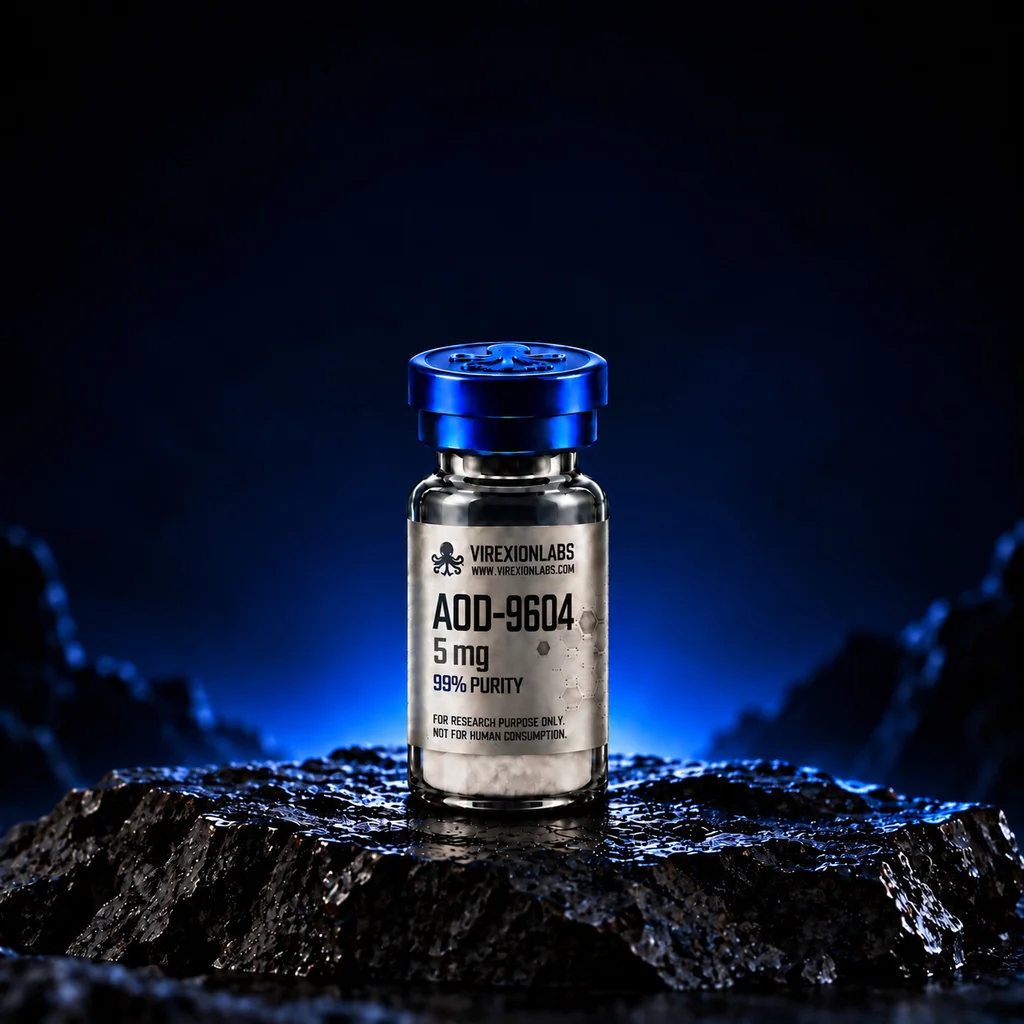
| Contents per vial | 5 mg |
|---|---|
| Form | Lyophilized powder |
| Packaging | Sealed glass vial |
| Purity | 99 % (HPLC) |
| Storage | 2–8 °C, keep dry and protect from light |
| Molecular formula | C78H123N23O23S2 |
| Molecular weight | 1815,10 g/mol |
| Sequence or structure | YLRIVQCRSVEGSCGF |
| CAS | 221231-10-3 |
| Intended use | For laboratory research only |
About this product
AOD-9604 is a modified fragment of the C-terminal part of human growth hormone being developed mainly for research on fat metabolism and obesity. It was designed to mimic some of the lipolytic effects of GH without the full growth hormone activity. Preclinical work showed an effect on lipolysis and lipogenesis. Later, it was also investigated in other tissue models.
What is AOD-9604?
AOD-9604 is classified as a “synthetic peptide or peptide analog” and is being evaluated in scientific research in relation to areas such as fat metabolism, lipolysis, lipogenesis, body weight. Attention is paid to its interaction with relevant receptors, enzymes or cellular pathways and subsequent changes in measurable laboratory parameters.
Mechanism of action under investigation
AOD-9604 is a modified fragment of GH 176-191. It is supposed to preserve metabolic signaling associated with fat without full activation of the growth hormone receptor.
MAIN AREAS OF RESEARCH
• Fat metabolism: AOD-9604 is a modified fragment of the C-terminal part of growth hormone investigated for metabolic processes in adipose tissue.
• Lipolysis: Preclinical research is devoted to the mobilization of stored fat and the release of fatty acids from adipocytes.
• Lipogenesis: At the same time, the effect on the formation and storage of new fat stores is being investigated to separate the metabolic effects from the growth effects of whole GH.
• Body weight: AOD-9604 has also been investigated in clinical development for obesity, but the available results have not confirmed a consistent clinical effect on weight reduction.
• Cartilage: A separate line of preclinical research investigates AOD-9604 in models of cartilage damage and osteoarthritis.
Research findings to date
Results should be judged according to the level of evidence: cellular and animal. AOD-9604 is a modified fragment of the C-terminal part of human growth hormone being developed mainly for research on fat metabolism and obesity. Preclinical work showed an effect on lipolysis and lipogenesis, but clinical results in weight reduction did not demonstrate the convincing effect needed for established obesity treatment.