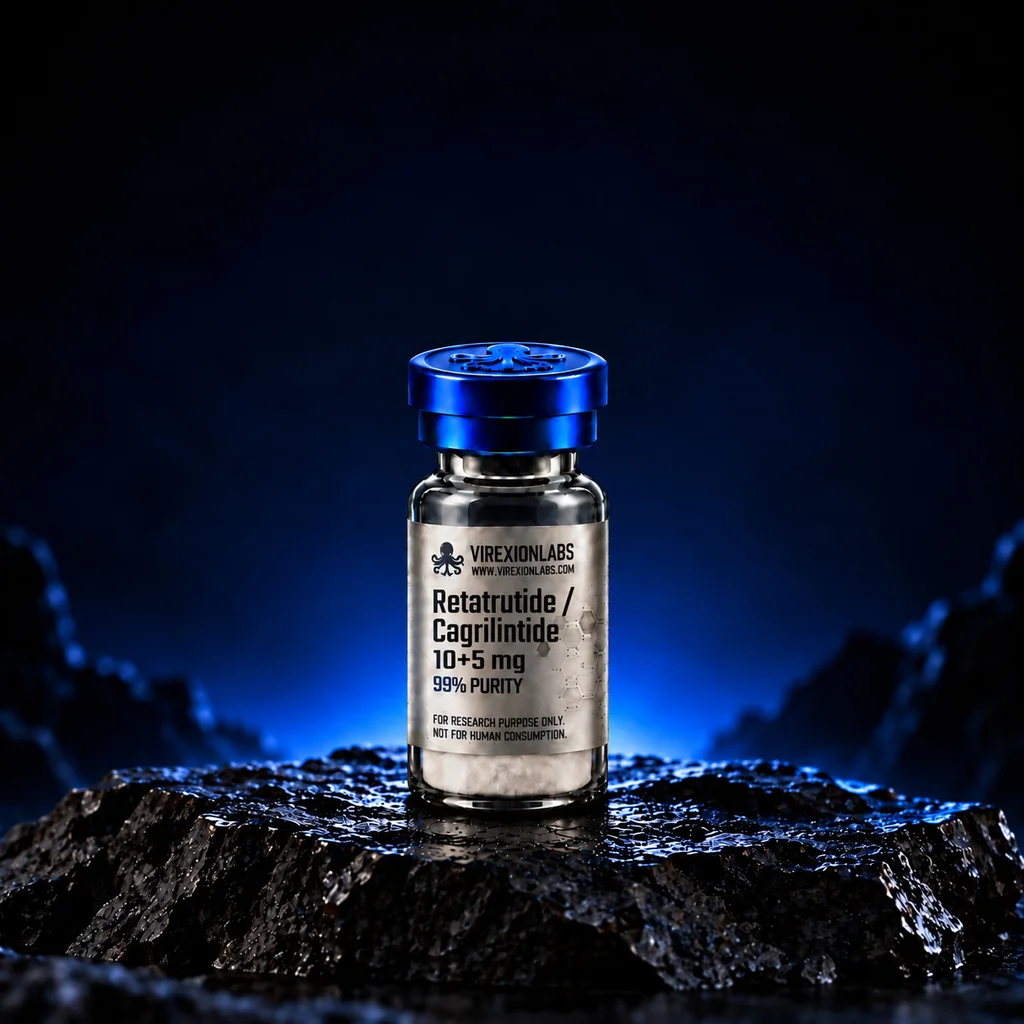
| Contents per vial | Retatrutide 10 mg + Cagrilintide 5 mg (15mg) |
|---|---|
| Form | Lyophilized powder |
| Packaging | Sealed glass vial |
| Purity | High purity, research grade-99 % (HPLC) |
| Storage | 2–8 °C, keep dry and protect from light |
| Molecular formula | Blend |
| Molecular weight | Blend |
| Sequence or structure | Retatrutide C221H342N46O68; Cagrilintide C194H312N54O59S2 |
| CAS | Retatrutide: 2381089-83-2; Cagrilintide: 1415456-99-3 |
| Intended use | For laboratory research only |
About this product
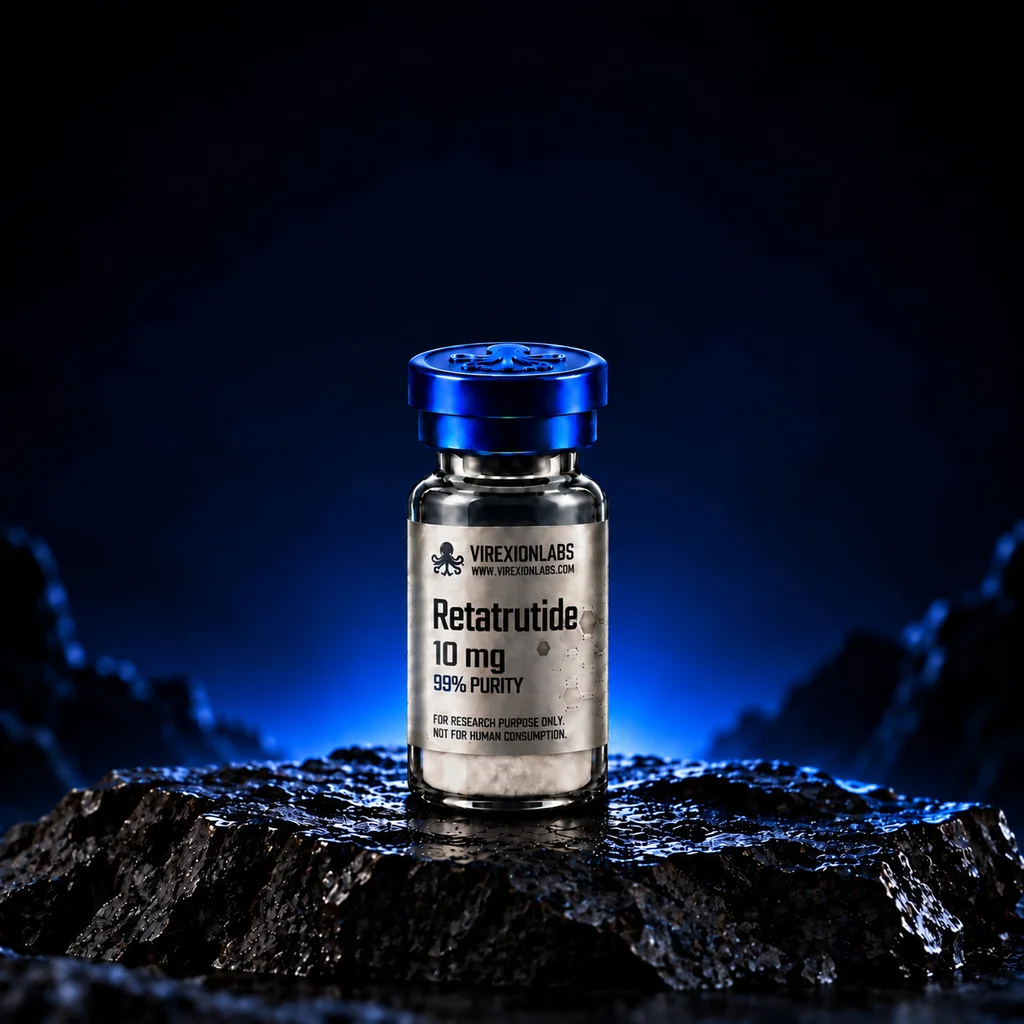
Retatrutide + Cagrilintide is a two-component research formulation containing 10 mg of retatrutide and 5 mg of cagrilintide. It combines a triple agonist of GIP, GLP-1 and glucagon receptors with a long-acting amylin analogue.
What is RETATRUTIDE + CAGRILINTIDE?
RETATRUTIDE + CAGRILINTIDE is a combination of two investigational peptide agents with different receptor profiles. Retatrutide activates GIP, GLP-1 and glucagon receptors. Cagrilintide is a long-acting amylin analog that binds to amylin receptors and affects signals associated with satiety. This exact combination of 10 mg + 5 mg is not the same formulation as the clinically studied combinations of cagrilintide with semaglutide.
Mechanism of action under investigation
Retatrutide simultaneously activates GIP, GLP-1 and glucagon receptors, thus interfering with the regulation of insulin response, food intake and energy metabolism. Cagrilintide mimics the effects of amylin and is being investigated for satiety signaling, slowing gastric emptying, and modulating the glucagon response. The combination makes it possible to investigate the concurrence of incretin, glucagon and amylin signaling.
MAIN AREAS OF RESEARCH
• Receptor signaling: Simultaneous activation of GIP, GLP-1, glucagon, and amylin receptors is evaluated, including possible additive or interacting responses.
• Regulation of food intake and satiety: Changes in food intake, satiety signals and neuroendocrine pathways regulating energy balance are monitored in experimental models.
• Glucose homeostasis: Research focuses on glucose, insulin, glucagon and other metabolic indicators influenced by incretin and amylin signaling.
• Energy metabolism: How the glucagon component of retatrutide, together with cagrilintide’s satiety signals, affects energy expenditure and lipid metabolism is being investigated.
Research findings to date
Retatrutide has been separately evaluated in clinical trials as a triple agonist of GIP, GLP-1 and glucagon receptors. Cagrilintide has been studied alone and in combination with semaglutide as a long-acting amylin analog.