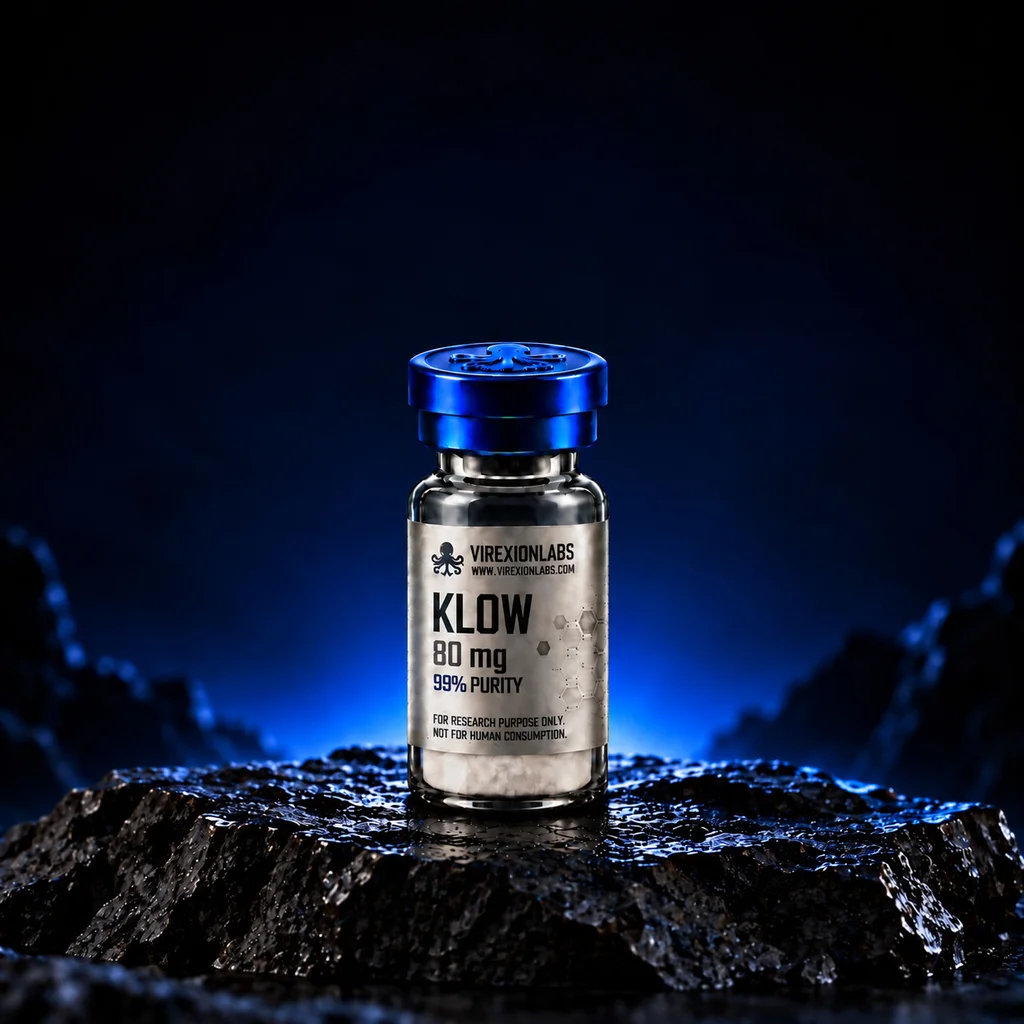
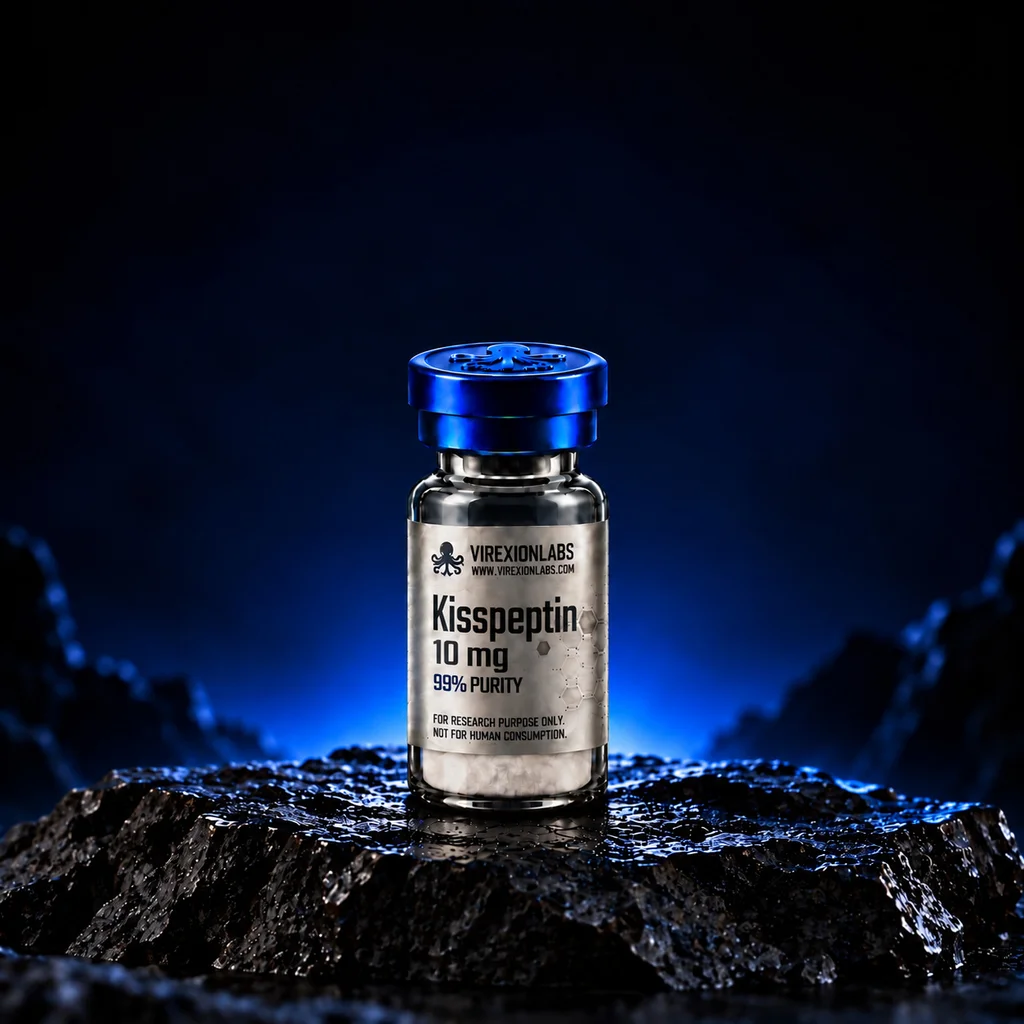
| Contents per vial | 10 mg |
|---|---|
| Form | Lyophilized powder |
| Packaging | Sealed glass vial |
| Purity | 99,86 % |
| Storage | 2–8 °C, keep dry and protect from light |
| Molecular formula | C63H83N17O14 |
| Molecular weight | 1302,44 g/mol |
| Sequence or structure | Human kisspeptin-10: YNWNSFGLRF–NH2 |
| CAS | 374675-21-5 |
| Intended use | For laboratory research only |
About this product
Kisspeptin is a natural neuropeptide and one of the main regulators of the reproductive hormonal axis. It activates neurons producing GnRH and thereby affects the subsequent release of LH and FSH. Research focuses on puberty, ovulation, fertility, hypogonadism and neuroendocrine regulation of reproduction. Kisspeptin is also being investigated in clinical trials of assisted reproduction. Its significance is therefore much more specific than general ‘hormonal health’.
What is Kisspeptin?
From a scientific perspective, Kisspeptin represents a substance classified as a synthetic peptide or peptide analog. Its experimental profile is mainly assessed through GnRH, LH and FSH, ovulation and fertility, puberty, while individual research questions can use different cell, tissue or organism models. Binding to target structures, subsequent signaling and changes in selected biological indicators are monitored.
Mechanism of action under investigation
Kisspeptin binds to the KISS1R receptor on GnRH neurons. Activation leads to the release of GnRH and subsequently to the secretion of LH and FSH from the pituitary gland.
MAIN AREAS OF RESEARCH
• Initiation of GnRH signaling: Kisspeptin activates the KISS1R receptor on neurons controlling GnRH and is one of the key signals triggering the reproductive hormonal axis.
• LH and FSH: After the activation of GnRH, the subsequent release of LH and FSH from the pituitary gland is monitored, which regulate the function of the ovaries and testicles.
• Ovulation and Fertility: Clinical research examines Kisspeptin in the management of egg maturation and hormonal processes important to reproduction.
• Puberty: Kisspeptin signaling is being investigated as one of the main biological mechanisms that activate the reproductive axis during puberty.
• Reproductive axis disorders: KISS1/KISS1R research is helping to clarify the causes of some forms of hypogonadism and puberty timing disorders.
Research findings to date
Results should be assessed according to the level of evidence: cell and animal models. Research focuses on puberty, ovulation, fertility, hypogonadism and neuroendocrine regulation of reproduction. Kisspeptin is also being investigated in clinical trials of assisted reproduction. In clinical research protocols, short-term hormonal changes and non-specific complaints, such as headache or hot flushes, were mainly observed.