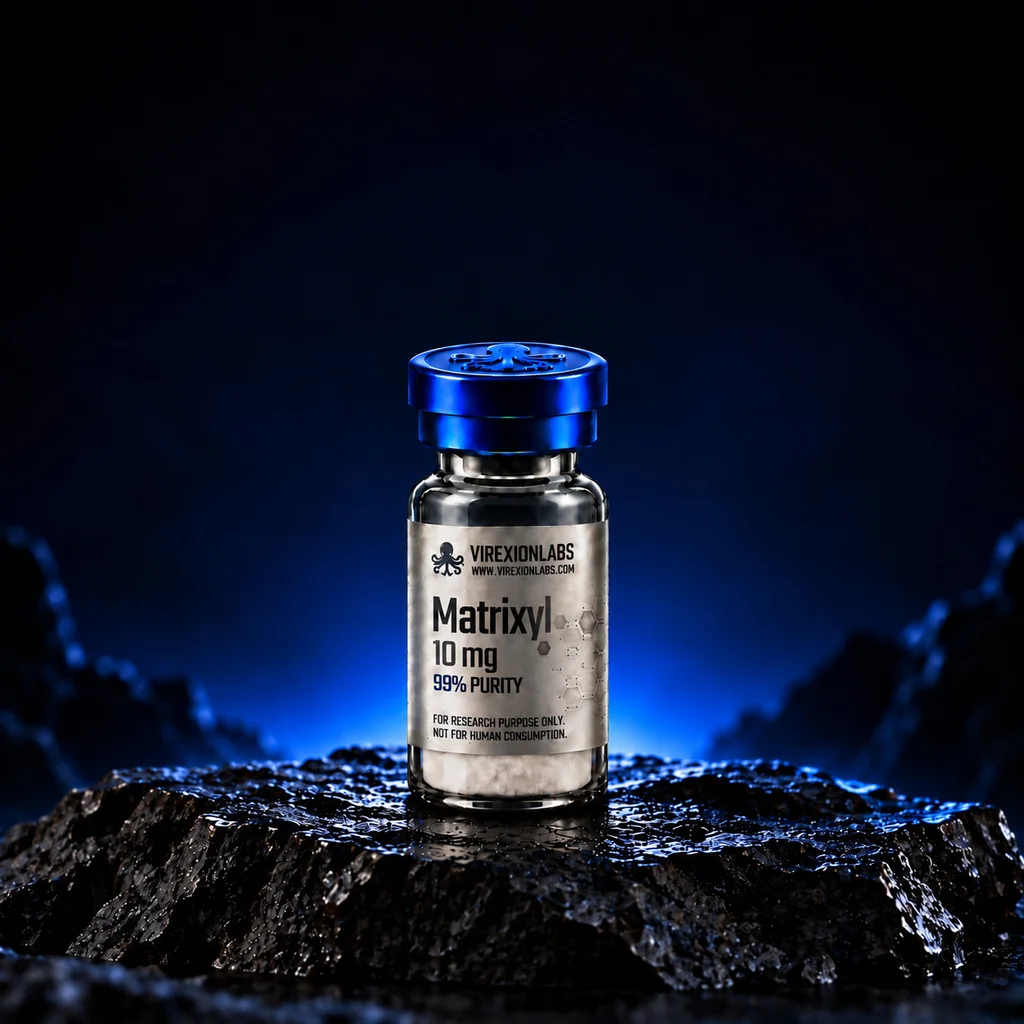
| Contents per vial | 10 mg |
|---|---|
| Form | Lyophilized powder |
| Packaging | Sealed glass vial |
| Purity | 99,81 % |
| Storage | 2–8 °C, keep dry and protect from light |
| Molecular formula | C39H75N7O10 |
| Molecular weight | 802,06 g/mol |
| Sequence or structure | palmitoyl pentapeptide-4: Pal–Lys–Thr–Thr–Lys–Ser (Pal–KTTKS) |
| CAS | 214047-00-4 |
| Intended use | For laboratory research only |
About this product
Matrixyl is the trade name for cosmetic matrikine peptides; the best-known original form is palmitoyl pentapeptide-4. It is mainly researched for the support of the extracellular matrix of the skin, collagen and the appearance of wrinkles. The peptide mimics matrix fragments that may signal the need for tissue regeneration.
What is Matrixyl?
Matrixyl is evaluated in scientific research in connection with areas such as collagen, wrinkles and skin texture, extracellular matrix, skin regeneration. Attention is paid to its interaction with relevant receptors, enzymes or cellular pathways and subsequent changes in measurable laboratory parameters.
Mechanism of action under investigation
Matrixyl peptides function as matrikines – signaling fragments of the extracellular matrix. The palmitoyl part improves penetration into the lipid environment of the skin.
MAIN AREAS OF RESEARCH
• Collagen: Matrixyl, most commonly palmitoyl pentapeptide-4, is being investigated as a signal cosmetic peptide supporting the processes associated with collagen formation.
• Wrinkles and skin texture: Topical research looks at fine lines, wrinkle depth, smoothness and other parameters of the appearance of aging skin.
• Extracellular matrix: The peptide is being investigated for fibroblast signaling and the formation of structural matrix components that affect skin firmness.
• Skin regeneration: Research focuses on the restoration of the skin matrix and the reaction of fibroblasts to signals similar to fragments produced during the breakdown of collagen.
Research findings to date
Results should be judged according to the level of evidence: cellular and animal. The evidence comes mainly from cosmetic, cellular and smaller clinical studies.