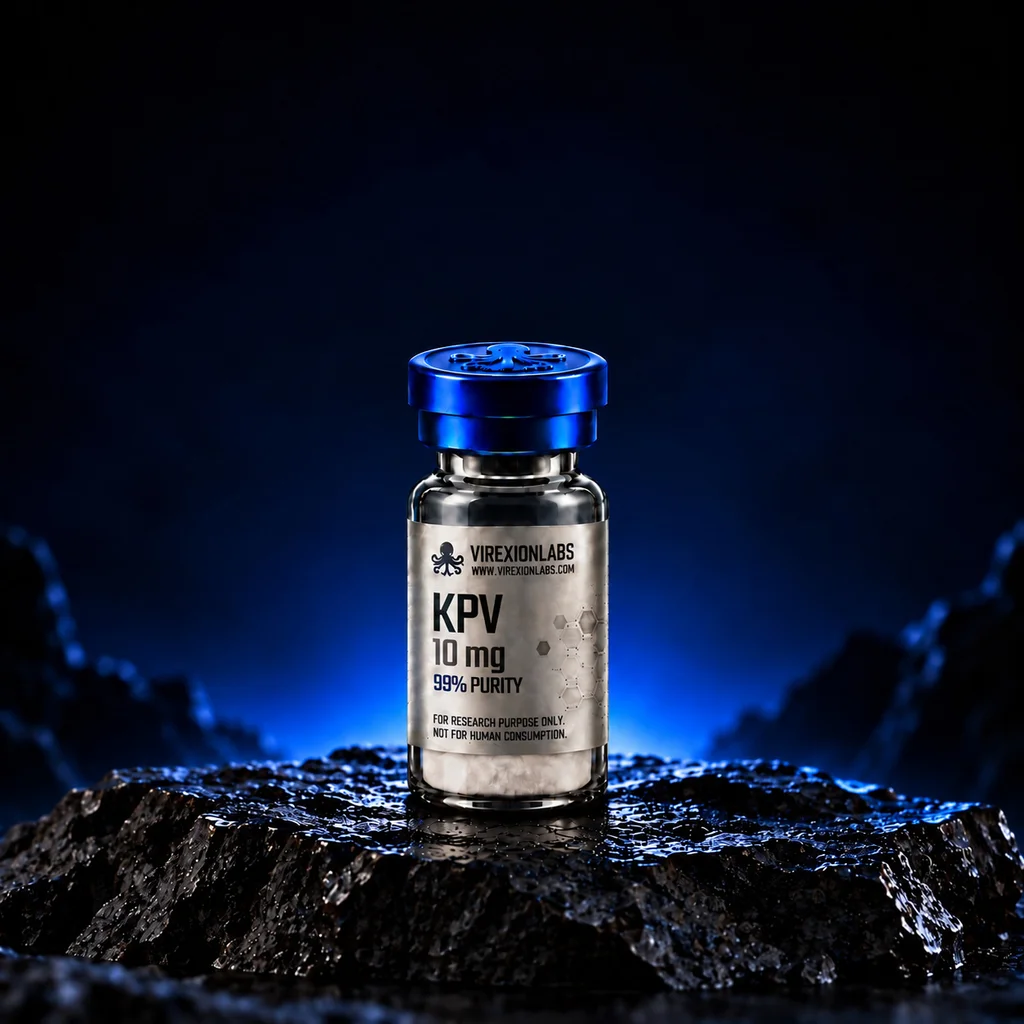
| Contents per vial | 10 mg |
|---|---|
| Form | Lyophilized powder |
| Packaging | Sealed glass vial |
| Purity | 99 % (HPLC) |
| Storage | 2–8 °C, keep dry and protect from light |
| Molecular formula | C16H30N4O4 |
| Molecular weight | 342,43 g/mol |
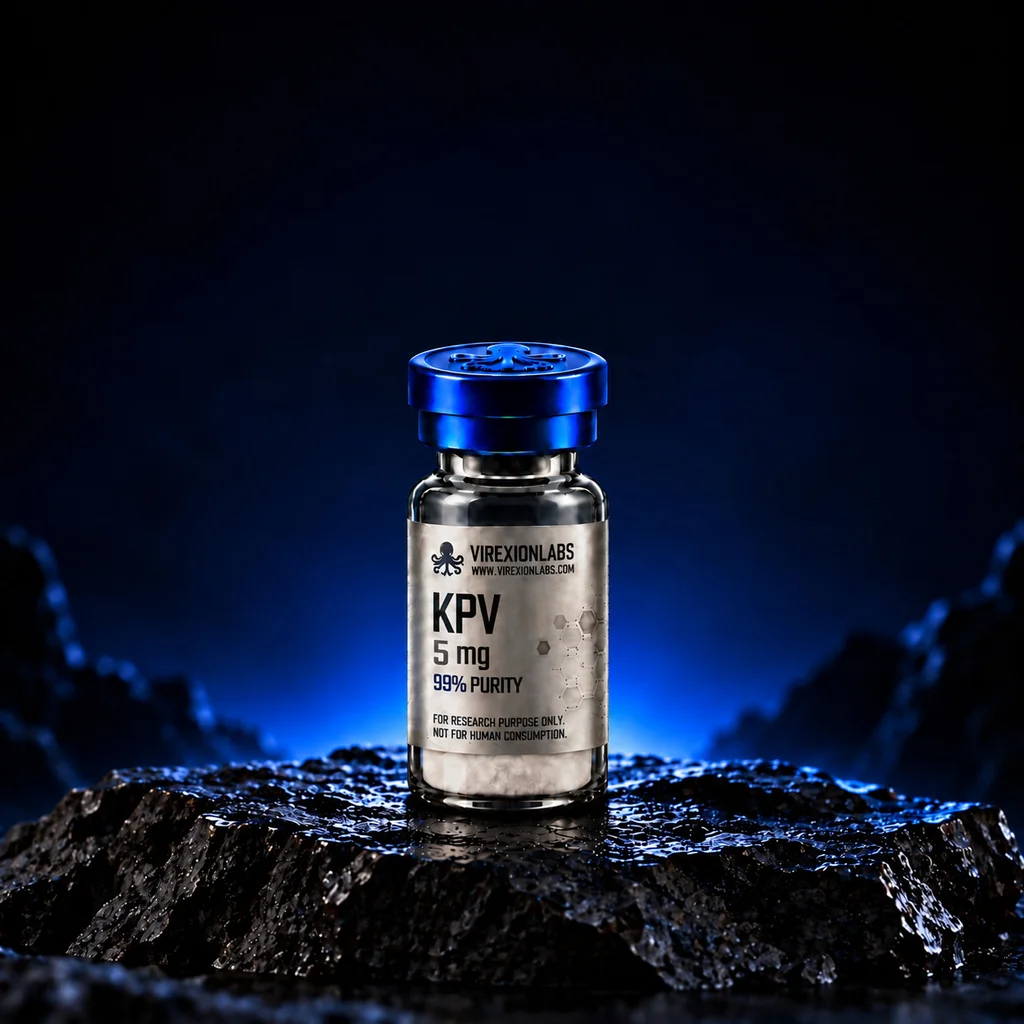
| Sequence or structure | Lys–Pro–Val (KPV) |
| CAS | 67727-97-3 |
| Intended use | For laboratory research only |
About this product
KPV is a short Lys-Pro-Val tripeptide derived from α-MSH. It is primarily being investigated for anti-inflammatory mechanisms in the skin and digestive tract. Cellular and animal work suggests modulation of inflammatory signaling without the pigmentation activity typical of whole α-MSH. It is therefore interesting in models of intestinal, skin and epithelial barrier inflammation.
What is KPV?
From a scientific perspective, KPV represents a substance classified as a synthetic peptide or peptide analog. Its experimental profile is mainly assessed through intestinal inflammation, skin inflammation, epithelial barrier, NF-κB signaling, while individual research questions can use different cell, tissue or organism models. Binding to target structures, subsequent signaling and changes in selected biological indicators are monitored.
Mechanism of action under investigation
KPV is a fragment of α-MSH that can suppress selected pro-inflammatory signaling pathways, especially NF-κB and cytokine production. It does not have the same receptor activity profile as the whole melanocortin hormone.
MAIN AREAS OF RESEARCH
• Inflammatory processes: KPV is a short fragment of α-MSH investigated for its ability to suppress selected inflammatory signals without the pigmentation effect of the whole α-MSH.
• Digestive tract: Research is devoted to the inflammatory processes of the intestinal mucosa and how KPV affects the communication between the epithelium and immune cells.
• Skin and epithelial barrier: KPV is investigated in keratinocytes and other epithelial cells for processes associated with inflammation and maintenance of barrier function.
• NF-κB and cytokines: Mechanistic studies show the effect of KPV on NF-κB and selected inflammatory mediators, for example IL-1β, IL-8 and eotaxin.
Research findings to date
Work to date with the substance KPV is devoted to areas that include intestinal inflammation, skin inflammation, epithelial barrier, NF-κB signaling. Clinical evidence in humans is still limited. With experimental peptides, the risk of a local reaction, immunogenicity or an unpredictable biological response must also be taken into account; these possibilities cannot be considered a complete clinical list.