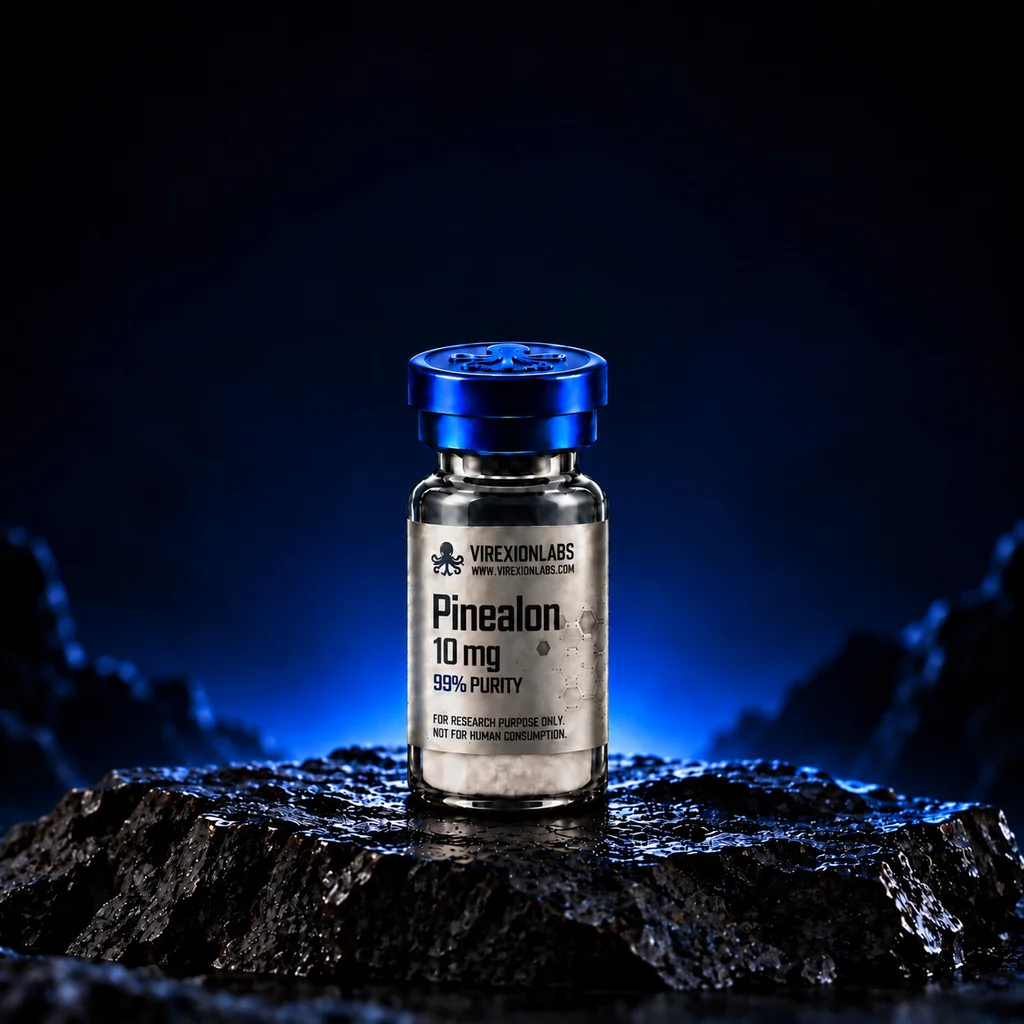
| Contents per vial | 10 mg |
|---|---|
| Form | Lyophilized powder |
| Packaging | Sealed glass vial |
| Purity | 99,51 % |
| Storage | 2–8 °C, keep dry and protect from light |
| Molecular formula | C15H26N6O8 |
| Molecular weight | 418,40 g/mol |
| Sequence or structure | Glu–Asp–Arg (EDR) |
| CAS | 175175-23-2 |
| Intended use | For laboratory research only |
About this product
Pinealon is a short Glu-Asp-Arg tripeptide studied mainly in Russian peptide bioregulation and neurobiology. Publications are devoted to nerve cells, oxidative stress, gene expression and cognitive processes. It is particularly suitable for experimental research on neuroprotection and cellular regulation.
What is Pinealon?
Pinealon is classified as a “synthetic peptide or peptide analog” substance and is evaluated in scientific research in connection with areas such as neuroprotection, oxidative stress, cognitive processes, gene expression.
Mechanism of action under investigation
The proposed action is related to the regulation of gene expression and the stress response of nerve cells.
MAIN AREAS OF RESEARCH
• Neuroprotection: Pinealon is a short peptide studied in experimental models of nerve cell protection against damage and stress.
• Oxidative stress: Research monitors changes in markers of oxidative damage and antioxidant defense in nervous tissue.
• Cognitive processes: Preclinical work evaluates memory, learning and other functions of the nervous system; quality clinical data is scarce.
• Gene expression: Part of the research is devoted to whether Pinealon changes the activity of genes associated with the function and survival of neurons.
Research findings to date
Results should be assessed according to the level of evidence: cell and animal models. It is particularly suitable for experimental research on neuroprotection and cellular regulation.