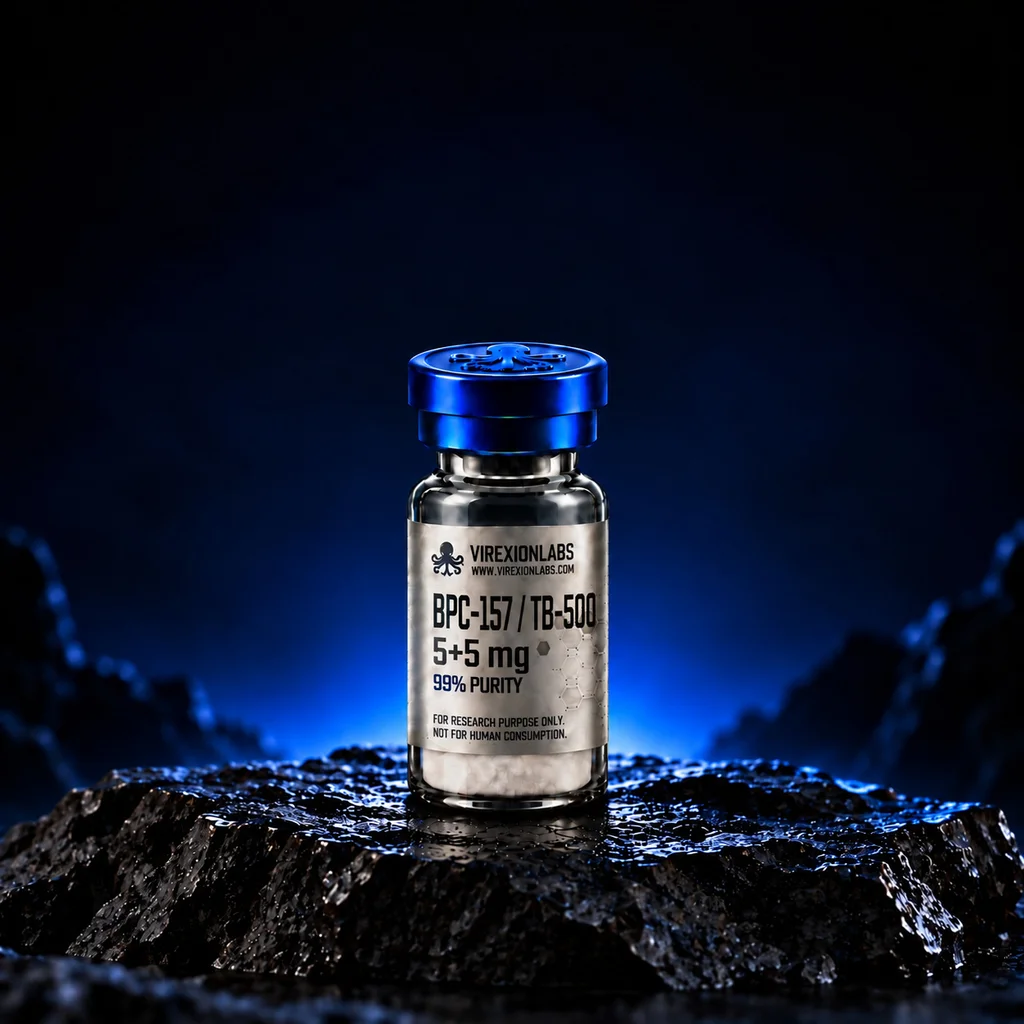
| Contents per vial | BPC-157 5 + TB-500 5 mg (10mg) |
|---|---|
| Form | Lyophilized powder |
| Packaging | Sealed glass vial |
| Purity | High purity, research grade - ≥99,74 % |
| Storage | 2–8 °C, keep dry and protect from light |
| Molecular formula | Blend |
| Molecular weight | Blend |
| Sequence or structure | BPC-157: G-E-P-P-P-G-K-P-A-D-D-A-G-L-V |
| TB-500 | Ac–LKKTETQ; N-acetylated thymosin beta-4 fragment, amino acids 17–23 |
| CAS | BPC-157: 137525-51-0; TB-500: 885340-08-9 |
| Intended use | For laboratory research only |
About this product
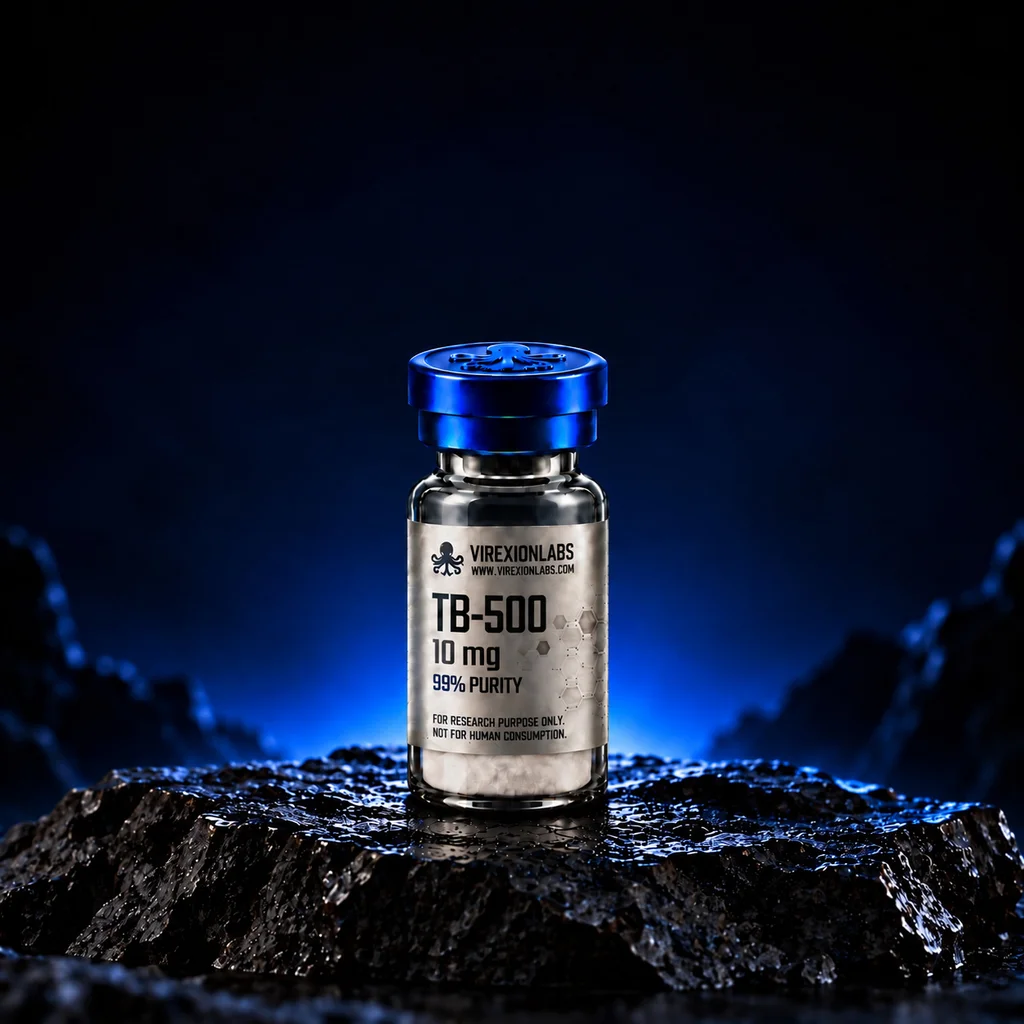
BPC + TB is a two-component research formulation containing 5 mg of BPC-157 and 5 mg of TB-500. It is intended for laboratory investigation of cell migration, angiogenesis, inflammatory processes and experimental mechanisms of tissue regeneration. The product is supplied as a lyophilized powder in a sealed glass vial.
What is BPC + TB?
BPC + TB is a combination of two synthetic peptides. BPC-157 is derived from a protective protein sequence studied mainly in preclinical models. TB-500 is a synthetic fragment related to thymosin beta-4. The exact identity, sequence and chemical form of both components must be confirmed by the certificate of analysis of the specific batch.
Mechanism of action under investigation
BPC-157 is being investigated in experimental models for signaling involved in angiogenesis, inflammatory response and tissue repair. TB-500 is associated with actin regulation, cell migration, and cytoskeletal organization. The combined formulation makes it possible to observe whether these mechanisms interact in a controlled laboratory model.
MAIN AREAS OF RESEARCH
• Cell migration and cytoskeleton: Cell movement, actin filament remodeling, and other processes necessary for experimental assessment of damaged tissue recovery are monitored.
• Angiogenesis and vascular response: Research models can assess new vessel formation, endothelial signaling, and changes in biomarkers associated with vascular repair.
• Inflammatory processes: The subject of investigation is the effect of individual components and their combinations on cytokines, oxidative stress and cellular reactions accompanying tissue damage.
• Experimental restoration of soft tissues: Changes in the organization of the extracellular matrix, migration of fibroblasts and other indicators of repair are observed in preclinical models.
Research findings to date
Knowledge about BPC-157 and TB-500 comes mainly from laboratory and preclinical studies of individual substances. The results describe possible effects on cell migration, angiogenesis, inflammatory signaling and tissue repair processes.